
Where Brighton City Directory Volumes Reside
Brighton's historical volumes sit in more than one place. A public catalog, the local library, a newspaper archive, a museum, and state-level finding aids each hold a piece of the shelf. The clearest named lead is XL's New Denver Suburban Directory, published by XL Directory Service. Publication began in 1927. The catalog points specifically to Brighton-inclusive editions for 1957 and 1961, though that is a catalog statement, not evidence of an unbroken Brighton run. The table keeps the directory lead separate from the records that can actually test an entry.
| Collection | Years | Where Held | Access |
|---|---|---|---|
| XL New Denver Suburban Directory | Publication begins 1927; Brighton editions identified for 1957 and 1961 | FamilySearch catalog and possible affiliate or library camera access | Edition, account, and image rights vary; complete Brighton run unknown |
| Brighton Blade | Metadata 1902-current; earliest listed 1903; weekly representation from 1980 forward | Chronicling America, Colorado Historical Society microfilm, and Anythink databases | LOC title record, microfilm holdings, and NewsBank/Infoweb access |
| Library of Congress city-directory materials | Guide covers mainly 1861-1960; microfilm for more than 1,200 cities | Library of Congress guides and collection paths | Brighton-specific volume availability must be checked |
| Adams archival groups | Licenses 1902-1921; certificates 1902-1958 and 1903-1975; plats 1905-1941 | Colorado State Archives finding aid | Finding aid and request route, not a universal name index |
The missing years deserve attention. No public source lists every edition, the final printed year, or a local shelf call number. Record the exact edition, page, publisher, and access path instead of stretching two cataloged years into a full run.
Brighton City Directory Years and Numbers
Dates read better beside the local record system. Brighton was platted in 1881 and incorporated in 1887, then became the Adams County seat in 1904. That timeline matters. It explains why newspapers, plats, and county records may cover years before a suburban directory volume ever reached town.
| 1902 | Adams County formed; Brighton Blade title metadata begins. |
|---|---|
| 1903 | Earliest listed Blade issue: March 6, volume 1, number 37. |
| 1927 | XL publication begins, according to the FamilySearch catalog. |
| 1957 | Cataloged XL edition includes Aurora and Brighton with a street guide. |
| 1961 | A second Brighton-inclusive XL edition is listed; the full run remains unconfirmed. |
| 1980 forward | Weekly Blade representation is listed from January 30, 1980; metadata reaches 1902-current. |
Note: Publication date, compilation date, and the date of an event in a listing can differ, so save each date separately.
Brighton City Directory and the Brighton Blade
The Brighton Blade is the strongest local companion to a printed directory volume. A newspaper supplies dated announcements around a name. The Library of Congress record describes metadata from 1902 forward, with the earliest listed issue in 1903. Title history shows Brighton Blade and G.A.R. Guardian for 1902-1903, an Adams County Sentinel predecessor entry for 1953-1955, and weekly representation from January 30, 1980 on. Those details describe the catalog record. They do not promise that every issue has been scanned. A notice can be a marriage announcement, an obituary, a civic meeting, a business opening, a club item, or a clue about a move. Search the title record and its "Libraries That Have It" path for Colorado Historical Society microfilm. Locally, Anythink's NewsBank/Infoweb route offers current and archived full-text newspaper access under its library rules. A notice is still a lead. Confirm any major identity or date with a record custodian, a census, or a recorded document. Anythink's Brighton Standard Blade archive access page is the best starting point for a searchable local news trail through its licensed databases.
Use a newspaper date to narrow the directory search. Then keep the paper's role distinct from a certified vital record or a recorded deed. Nicknames, delayed publication, and incomplete issue coverage can all change how a name appears.
How to Read a Brighton Directory Entry
A Brighton directory entry is a compact snapshot. The Library of Congress guide notes that city directories commonly list surnames alphabetically. They may carry address, phone, spouse, and occupation. A reverse or criss-cross section works from the street or phone number instead. No scanned Brighton XL entry appears in the public catalog. So read the fields below as an inspection checklist. They are not a claim that every 1957 or 1961 page carries each mark.
| Entry detail | What to record |
|---|---|
| Name | Surname, given name, initials, spelling variant, and any cross-reference. |
| Household line | Spouse, widow, or household notation when the publisher uses it. |
| Occupation | The printed occupation or business descriptor, copied with the edition’s wording. |
| Address | House number, street form, apartment or unit detail, and any “1ST” or “FIRST” spelling. |
| Contact and status marks | Phone, owner or renter mark, boarding notation, and the abbreviation key that explains them. |
| Edition trail | Year, publisher, page, alphabetical or street-guide section, and image or camera identifier. |
- Criss-cross directory
- A reverse section arranged by street address or phone so a search can begin with a place instead of a surname.
- Householder index
- An alphabetical household listing that points to the person or address used by that volume.
- Abbreviation key
- The publisher’s legend for short forms and symbols. Find it before reading an “r,” “h,” widow, or status mark as fact.
- Directory image
- The scanned page or camera view that lets the researcher verify the exact printed line rather than relying on a catalog description.
Anythink Brighton City Directory Research
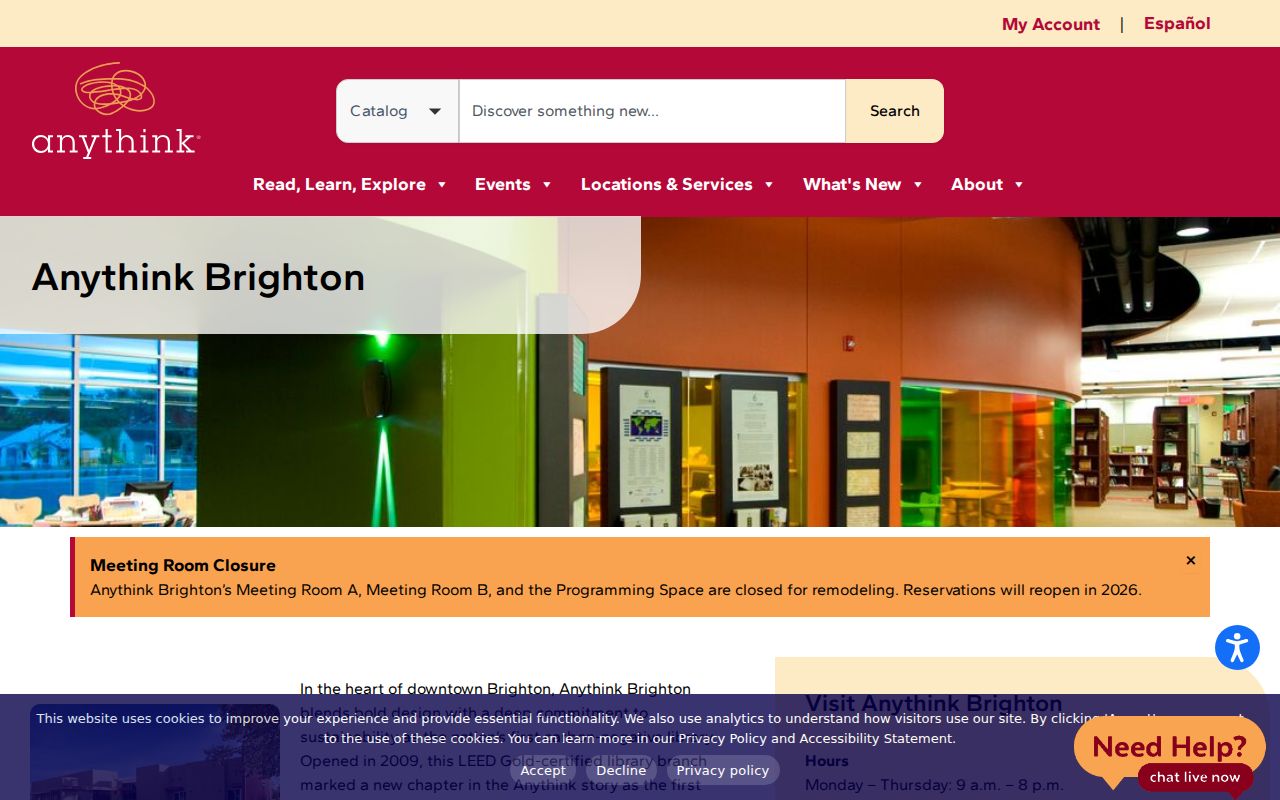
Anythink Brighton's branch information puts local research help at 327 E. Bridge Street in Brighton. The listed phone is 303-405-3200. Public computers, wireless printing, study rooms, and research assistance are available. These support work with newspaper databases and catalog leads. Hours run Monday through Thursday 9 to 8. Friday and Saturday hours are 9 to 5. Sunday is closed. Remodeling has temporarily closed meeting rooms and programming. Reservations are expected to reopen in 2026. Check the branch notice before a long archive visit. The public pages do not state exact print city-directory years. Reverse-directory shelf numbers, obituary-index coverage, and a paid house-history service are also unstated. Ask reference staff to check XL New Denver Suburban Directory editions. They can also pull reverse or criss-cross volumes, Brighton Blade microfilm, yearbooks, cemetery leads, and local-history catalogs. A catalog question often needs shelf knowledge, not just a web search. The Anythink branch page is the practical place to start.
Bring a name, an address, a date window, and alternate street spellings. That gives staff a research question they can actually test instead of guessing at a missing year.
Brighton City Directory Research at Adams County Museum
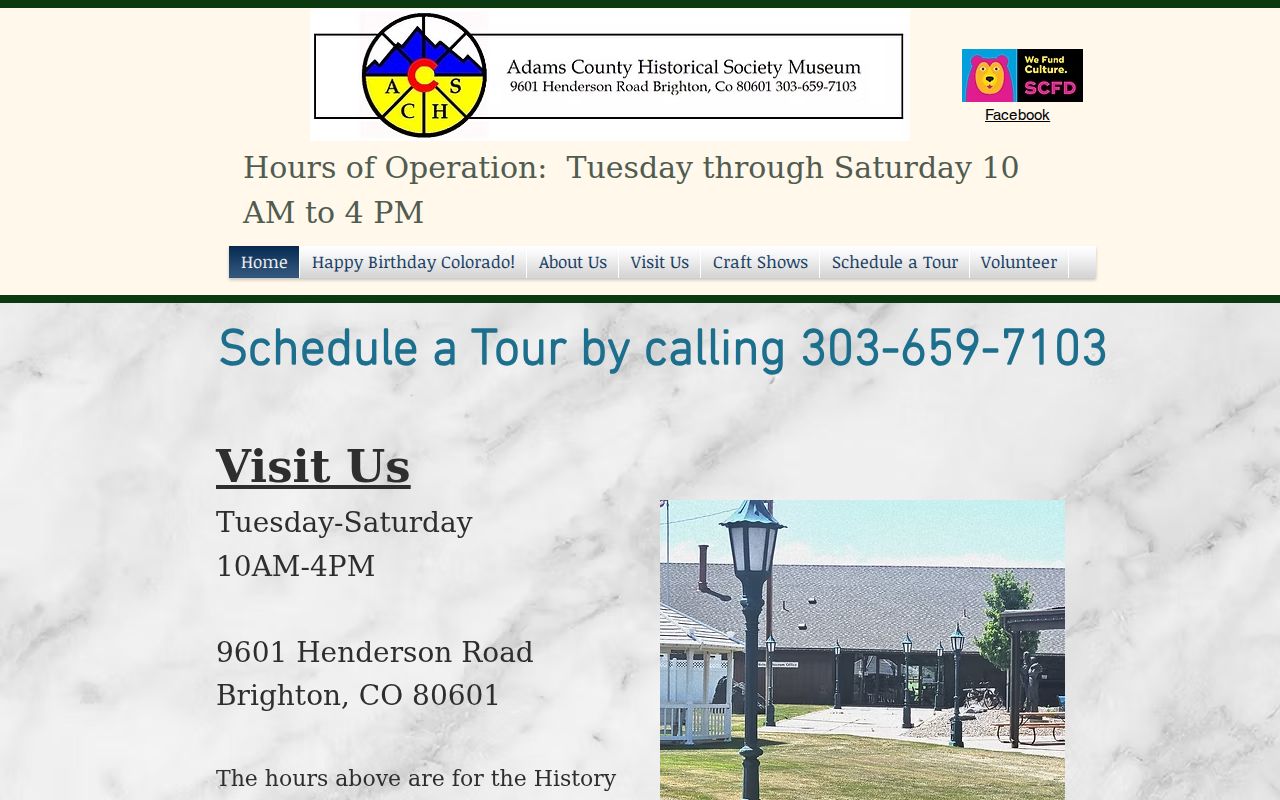
Adams County Museum offers Brighton residents a second local research route at 9601 Henderson Road. Its mission spans Adams County and South Platte history. The scope also covers culture, art, zoology, botany, and assorted records. Hours run Tuesday through Saturday, 10 to 4. Admission to the main building is free. The museum asks visitors to call 24 hours ahead for access to all buildings. Research questions go to 303-659-7103.
The museum publishes no detailed finding aid, name index, fee schedule, or directory list online. So bring a focused question rather than assuming the shelves hold nothing useful. Photographs and school and community records can help explain a city directory entry. So can agriculture and rail context, subdivision material, and name or address references. The museum page points the way to that physical collection.
Treat the museum as a starting point. It offers context and can steer you toward the right records office. Copy the collection name and date exactly as staff supply them, because a local memory source points to a record without ever replacing the record itself.
Note: A finding-aid gap means the collection needs a direct inquiry; it does not establish that a named person or volume is absent.
Brighton City Directory Images and Catalog Access
The FamilySearch catalog for XL’s New Denver Suburban Directory credits the publication to XL Directory Service, beginning in 1927. The catalog lists a 1957 Aurora and Brighton edition with a street guide, plus a 1961 edition. Camera, account, affiliate, and image-rights conditions vary by item. When a scan opens, record the edition title, year, publisher, page, and camera or image number. The catalog alone does not prove every year from 1927 through 1961 includes Brighton.
For broader method, the Library of Congress city-directory guide is the standard reference. Its collection framework runs mainly 1861-1960, with microfilm for more than 1,200 cities and business-directory material from 1902-1935. Brighton holdings still require a catalog, library, or microfilm check. The guide earns its keep by explaining why a name section and an address section answer different resident lookup questions.
The XL catalog entry stands as the most concrete Brighton directory lead available.
If a view stays locked, keep the catalog citation. Ask Anythink, the Adams County Museum, or a FamilySearch affiliate library whether a viewable copy of the Brighton volume exists.
Trace Family History Through Brighton City Directories
One directory year equals one line in a household timeline. The 1950 Census is the latest federal release under NARA’s 72-year rule. Its name, street address, age, birthplace, and occupation fields appear there. The relationship field works too. It can separate same-name residents of Brighton. A census is point-in-time. A directory, by contrast, may be compiled well before publication.
- Start with a known Brighton address or surname and choose the directory edition that brackets the date. Write down the street form before searching the alphabetical section.
- Check the street or reverse section first when available. Record the occupant line, number order, business entry, phone, and page, then look for the same name alphabetically.
- Read the abbreviation key before treating a spouse, widow, owner, renter, or boarding mark as a relationship fact. Copy the printed wording and note uncertainty.
- Pair the directory clue with the NARA 1950 Census by address, age, birthplace, and household relationship. A census match can distinguish similar names without proving continuous occupancy.
- Use the Brighton Blade for an obituary, marriage notice, civic activity, or move clue, then test that clue with a recorder, archive, probate, or eligible vital-record route.
A vanishing name has many explanations. The household may have moved, someone died, a listing practice changed, or the family simply went unlisted, and gaps in the available run happen too. Treat a last appearance as just that. Before drawing any family-history conclusion, save the source date, publication date, address spelling, and the next independent record.
Brighton City Directory Addresses: 1ST and FIRST
Brighton’s old address vocabulary can fool a solid search. The preservation plan shows one example. It normalizes “5 S 1ST AVE” to “5 S FIRST AVE.” Try both spellings, plus directional and street-type variants. Adams plats held by the Colorado State Archives cover 1905-1941 and can connect a lot, block, or subdivision to a later street label. Brighton publishes no single citywide renumbering or renaming year, so resist inventing one.
This addressing puzzle sits inside a larger Brighton records story. Adams County’s first board met in Brighton in 1902. The 1906 courthouse at 4th and Bridge is now City Hall. County grantor and grantee books date from 1902. A restoration project’s first phase treated 83 books, while more than 1,200 were reported as needing work. That backlog explains why a paper-book or archive branch can matter when a digital search returns nothing.
Note: The complete Brighton directory run remains unknown, so every conclusion should name the editions actually inspected rather than implying uninterrupted yearly coverage.